Listen to patients, improve care: the Varha rheumatology story
In Varha’s rheumatology care, almost every patient now reports their own health outcomes digitally. Their experience shows that when answering is easy, timely and part of the visit, patients gladly take an active role in their own care.
The patient as a partner in care
The patient is the only person who knows how their symptoms, function and quality of life change between appointments. When that knowledge reaches professionals in a structured form, it shapes treatment decisions, follow-up and the way services are developed.
Yet many wellbeing services counties and hospital districts still struggle with the same practical question: how do you collect patient-reported outcome measures (PROMs) effectively? Paper forms get lost, separate portals go unused, and low response rates leave data too thin to rely on. Patient engagement does not happen by itself. It has to be designed into the care pathway.
Why PROMs and PREMs matter
PROMs are validated questionnaires in which patients report their own symptoms, functional ability and quality of life. Patient-reported experience measures (PREMs) capture how patients experienced their care.
Together they show outcomes and quality of care from the patient’s point of view. They are a cornerstone of value-based healthcare: they support shared decision-making, make remote follow-up possible and give organisations reliable data for quality improvement. But their value depends on one thing above all, a high response rate.
BCB MyHealth: automated PROM collection
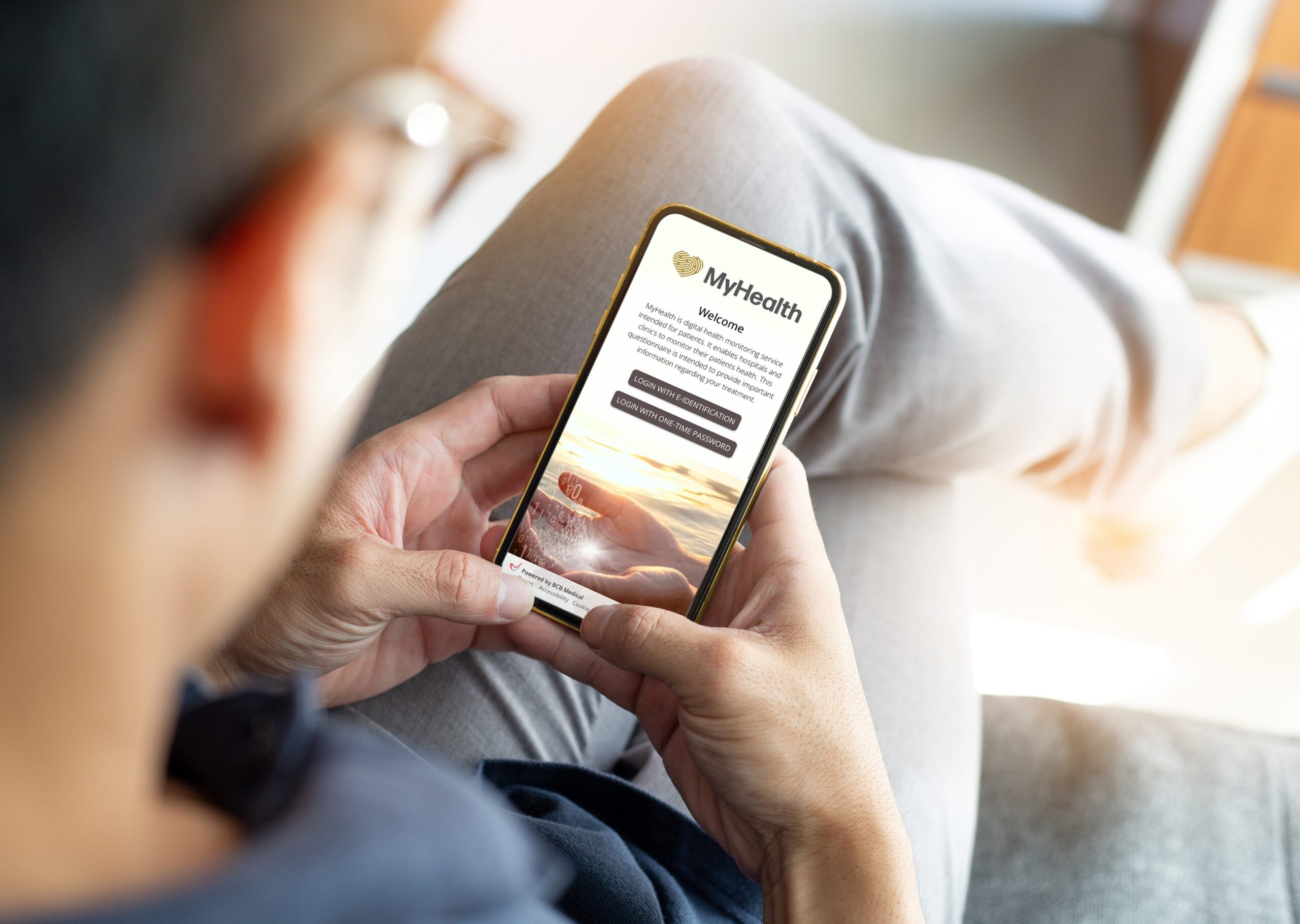
BCB MyHealth is a digital patient engagement platform from BCB Medical, in active use in 19 of Finland’s 21 wellbeing services counties. Healthcare organisations use it to collect PROMs, PREMs and other patient feedback electronically.
With MyHealth Questionnaires, questionnaires are sent to patients automatically at set points in their care: before a visit, after surgery or at follow-up. Patients answer securely online, and their answers are stored as structured data.
- Fully integrated with BCB Clinical Information Management Systems (CIMS), so professionals see the patient’s own view alongside clinical data at the point of care
- Transferable to the organisation’s EHR and data repository for care planning, follow-up and knowledge-based management
- Generic and disease-specific questionnaires, from pre-visit forms and quality-of-life measures to postoperative follow-up
- Guidance for patients, such as self-care advice and instructions before or after treatment
- Real-world data analytics through BCB AI Dataroom
Varha: close to 100% response rate in rheumatology
The Wellbeing Services County of Southwest Finland (Varha) shows what systematic patient engagement can achieve. Varha uses MyHealth Questionnaires in 23 different disease-specific BCB CIMS. PROMs are collected widely from patients with orthopaedic conditions, inflammatory bowel disease, obesity and rheumatic diseases.
In the best use cases, such as rheumatology, the MyHealth response rate is close to 100%. That is unique compared with any other PROM collection method, and it means the data reflects practically the whole patient population, not just the most active respondents.
“I thank our secretaries and nurses, who are behind the high response rate. Patients receive an invitation and a reminder to complete the MyHealth questionnaire before their visit. Our personnel then checks whether it has been filled in, and if not, the patient is handed a tablet at the clinic and completes it before the appointment. For us clinicians, the benefit is tangible: patient-reported outcomes are available at the visit, and because nearly everyone responds, we can trust that our quality data describes all of our patients.” -Laura Kuusalo, Rheumatologist, Varha Rheumatology Clinic
What makes it work
Varha’s success rests on four factors that any organisation can learn from.
- The right questionnaire at the right time. Questionnaires are matched to the patient’s condition and timed to meaningful points on the care pathway, so every question feels relevant.
- Automatic activation. Questionnaires are triggered by the pathway itself. Professionals don’t have to remember to send them, and no patient falls through the cracks.
- Freedom to answer anytime, anywhere. Patients can respond when it suits them, on their phone or laptop. Most Varha rheumatology patients choose to answer at home.
- A chance to answer at the clinic. Varha has provided tablets at the rheumatology outpatient clinic so patients can complete their questionnaires while waiting for their appointment.
The last point deserves emphasis. Most patients still prefer to answer at home, but the possibility to respond at the clinic has proved essential for reaching a near-complete response rate. As rheumatologist Laura Kuusalo from Varha points out, much of the credit belongs to the clinic’s secretaries and nurses. They follow up on each patient’s questionnaire ahead of the appointment, and anyone who has not yet responded can do so on a tablet in the waiting room. In this way, answering becomes a natural step of the visit, and the patient’s own report is at hand when patient and professional meet.
Turning patient answers into insights for better care
A high response rate is not the goal in itself. It is what turns patient-reported data into something professionals can rely on: in the appointment, in remote follow-up and in developing services. The structured data can also be transferred to hospital data repositories or analysed with BCB’s AI-driven analytics tool.
This is where the real insights emerge. The analyses show how patients’ symptoms, functional ability and quality of life develop over time, how different treatments work in everyday practice, and where the care pathway can be improved. Turned into actionable insights, the data creates real value for knowledge-based management and for the future of rheumatology care.
When patients share how they are really doing, and see that their answers are used, they become active partners in their own care. That is the promise of patient engagement, and Varha shows it can be delivered at scale.